Ecommerce Product Engraving


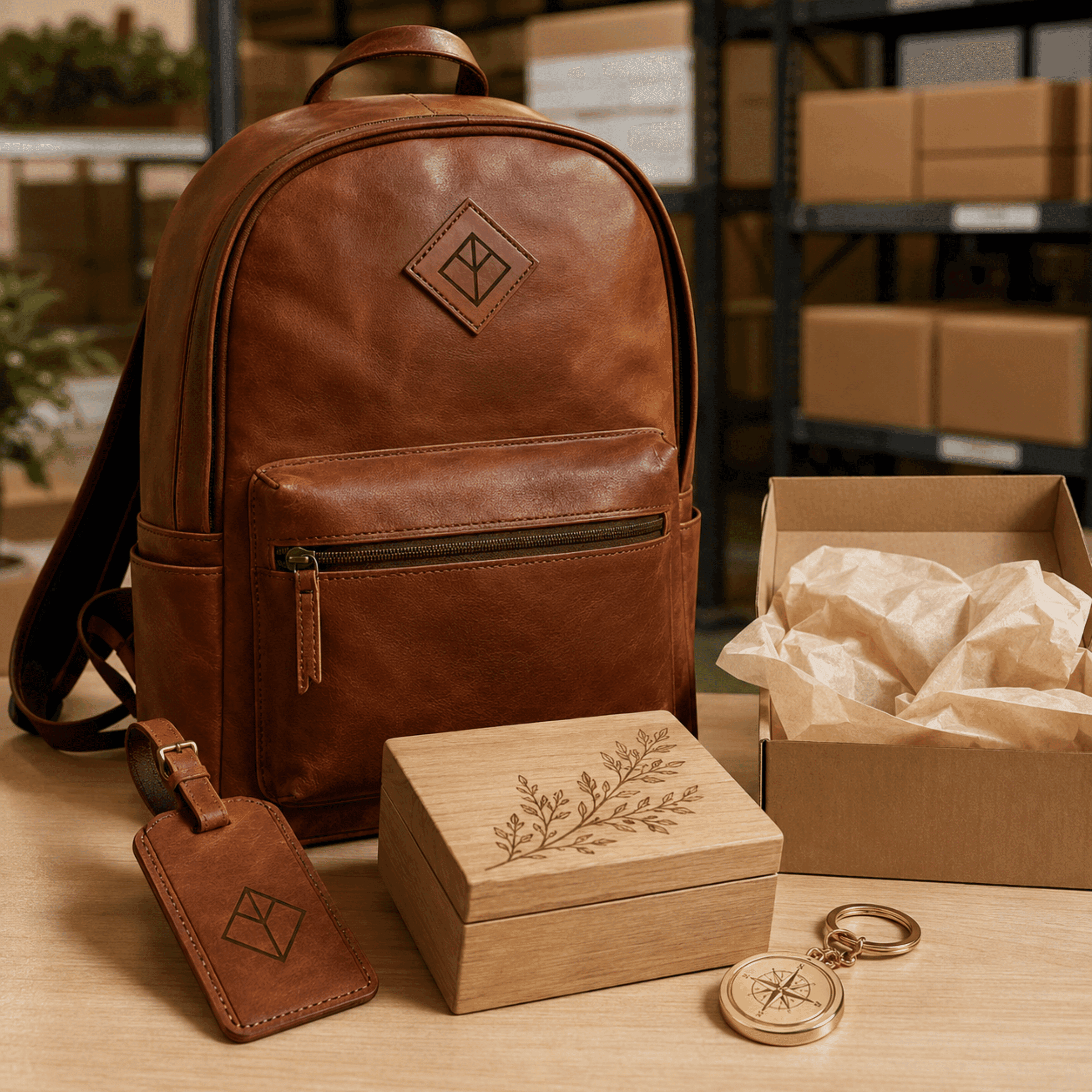
Personalization has become one of the most effective ways for ecommerce brands to make ordinary products feel more meaningful. A name engraved on a leather wallet, a date added to a wooden keepsake, or a special message placed on a metal accessory can turn a standard item into a memorable gift.
The challenge is delivering that personalization efficiently and accurately.
Pre-engraving inventory limits flexibility, increases the risk of unsold merchandise, and makes it nearly impossible to predict every name, date, monogram, or message customers may request. On-demand engraving solves these problems by customizing products only after orders are placed.
When engraving and fulfillment are managed within the same operation, brands can store blank inventory, receive personalized orders through their ecommerce stores, engrave each item, complete quality control, and ship the finished products directly to customers.
This creates a scalable way to offer personalized ecommerce products without operating an in-house engraving department.
What Is On-Demand Engraving?
On-demand engraving is a production model in which a product is engraved after a customer places an order.
Instead of stocking products that have already been personalized, an ecommerce brand stores blank or undecorated inventory. A name, date, monogram, logo, message, or design is then engraved onto the product based on the customer’s order.
A typical on-demand engraving order follows this process:
- A customer selects a product and enters the requested personalization.
- The order and engraving details are sent to the fulfillment operation.
- The correct blank product is picked from inventory.
- The requested artwork or text is prepared using an approved template.
- The product is engraved according to its specifications.
- The finished product is inspected for accuracy and quality.
- The item is packed and shipped directly to the customer.
This model combines ecommerce fulfillment with made-to-order product customization. It can support individual direct-to-consumer orders, subscription programs, corporate gifting, employee gifts, influencer kits, retail dropshipping, and larger personalized campaigns.
Why On-Demand Engraving Is Valuable for Ecommerce Brands
Consumers often view personalized products as more thoughtful and valuable than standard merchandise. For ecommerce brands, that added emotional value can create several important business advantages.
Higher Perceived Product Value
Engraving transforms a standard item into something created specifically for the recipient. This distinction can support premium positioning and allow brands to charge an additional personalization fee without significantly changing the underlying product.
More Gift-Ready Products
Engraved products are popular for birthdays, weddings, anniversaries, graduations, holidays, employee recognition, client gifts, and other milestone events.
Adding personalization can help products compete in more gift-related searches and shopping categories.
Less Pre-Customized Inventory
Brands do not need to predict which names, initials, dates, or messages customers will request. Blank inventory can be used for both standard and personalized orders, reducing the risk of capital becoming tied up in products that cannot be resold.
A Broader Product Catalog
One base product can support numerous personalization options. Brands can offer different fonts, monograms, engraving placements, and approved designs without creating a separate physical product for every possible combination.
Stronger Customer Connections
A product carrying a meaningful name, date, or message feels personal and memorable. This can strengthen the unboxing experience, encourage customers to share their purchases, and help brands build long-term loyalty.
Scalable Product Customization
When engraving is integrated with inventory management and order fulfillment, brands can process personalized products without manually coordinating every order with a separate decorator or customization vendor.
What Ecommerce Products Can Be Engraved?
On-demand engraving can be used across many ecommerce categories. Popular products include:
- Leather wallets
- Leather luggage tags
- Leather journals and portfolios
- Leather belts and keychains
- Backpacks and travel accessories
- Wooden cutting boards
- Wooden boxes and keepsakes
- Wooden coasters and ornaments
- Stainless-steel tumblers
- Water bottles and drinkware
- Barware and kitchen accessories
- Metal tools and tags
- Plated jewelry and pendants
- Key rings and gift accessories
- Acrylic awards and signage
- Anodized aluminum products
- Corporate gifts
- Employee awards
- Event merchandise
- Branded promotional products
Not every product within these categories will produce the same result. Coatings, finishes, curves, seams, hardware, grain patterns, and product construction can all affect engraving quality.
Every new product should be sampled and tested before it is offered to customers.
Materials Commonly Used for Ecommerce Engraving
Different materials respond to engraving in different ways. The proper equipment, settings, and production process must be selected for each product.
Leather and Leather-Like Materials
Engraving can create a refined and permanent mark on many leather products. The final color and contrast depend on the type of leather, its finish, its treatment, and its original color.
Natural leather may vary slightly from one product to another. Synthetic leather and other leather-like materials can react differently to heat, so they must be tested to confirm appearance, consistency, and material safety.
Common engraved leather products include wallets, journals, luggage tags, backpacks, keychains, portfolios, and gift accessories.
Wood
Wood is one of the most popular materials for personalized gifts, home goods, and keepsakes.
The wood species, grain, moisture content, resin, and surface finish can influence the color and depth of the engraving. Because wood is a natural material, slight variations should be expected.
Brands should establish realistic visual standards and make customers aware that natural grain patterns can affect the final appearance.
Stainless Steel and Coated Metals
Metal products may be marked or engraved using a process selected for their specific composition and finish.
Coated tumblers and anodized aluminum products can produce strong contrast when the surface layer is removed. Bare stainless steel may require a different type of laser or metal-marking process.
Common products include drinkware, tags, tools, accessories, barware, and promotional products.
Plated Products
Gold-plated, silver-plated, and other plated inventory requires careful testing because the decorative layer may be thin.
Engraving settings and depth must be carefully controlled to create the desired appearance without unnecessarily damaging the surrounding finish. Product samples should always be completed and approved before a plated product is launched.
Acrylic
Acrylic can produce clean, detailed engraving for signs, awards, displays, ornaments, and promotional products.
Cast and extruded acrylic may react differently during production, so it is important to identify the exact material before developing an engraving process.
Glass
Certain glass products can be laser engraved to create an attractive frosted appearance.
However, the composition, thickness, shape, and internal stress of the glass can affect the risk of chipping or cracking. Testing is especially important for curved drinkware and delicate glass products.
Laser Engraving and Other Engraving Methods
The best engraving method depends on the product, material, desired appearance, and order volume.
Laser Engraving
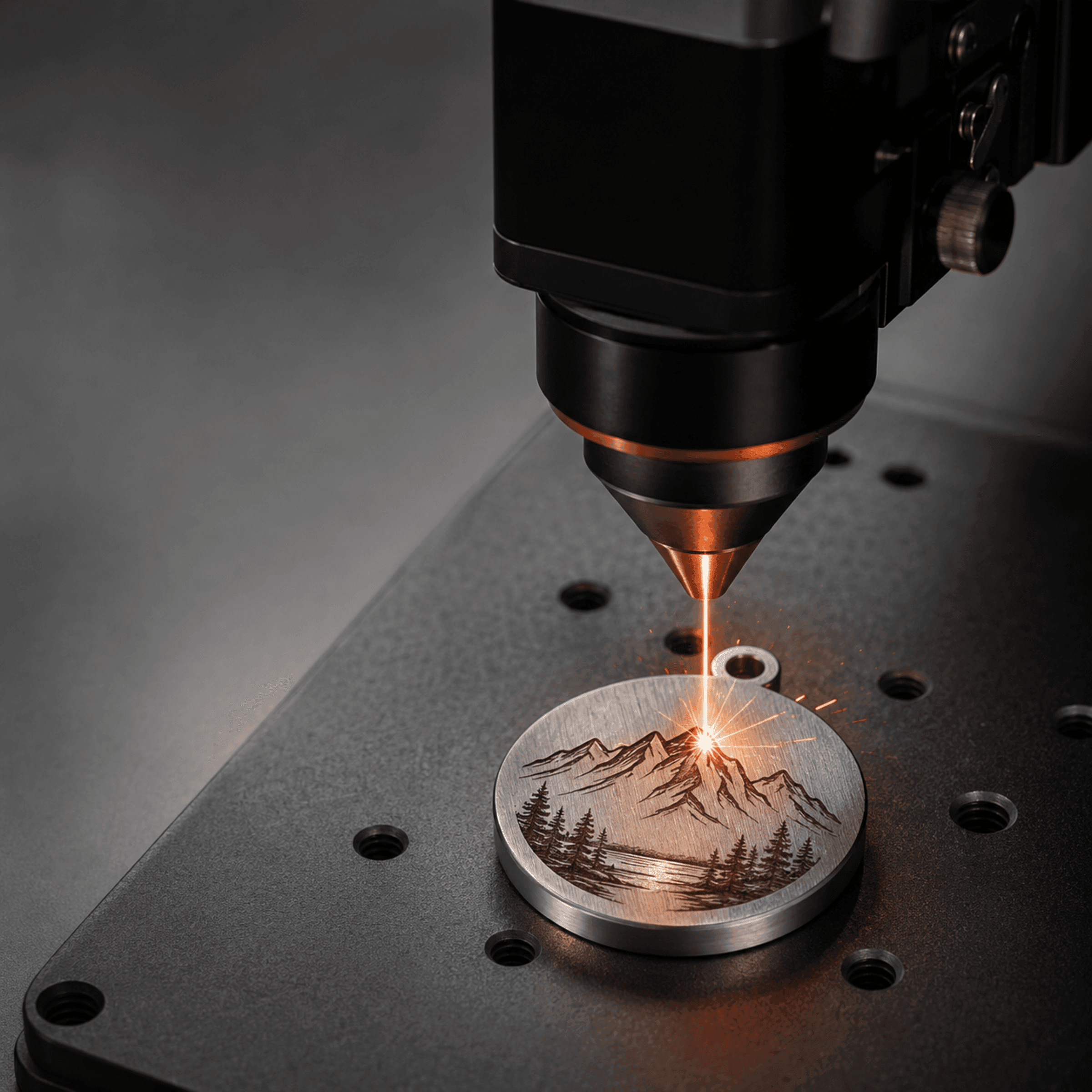
Laser engraving uses a focused beam to remove, alter, or mark the surface of a product.
It is highly versatile and can reproduce names, dates, logos, patterns, monograms, and detailed graphics. Different laser systems are designed for different materials, so the equipment must be matched to the product.
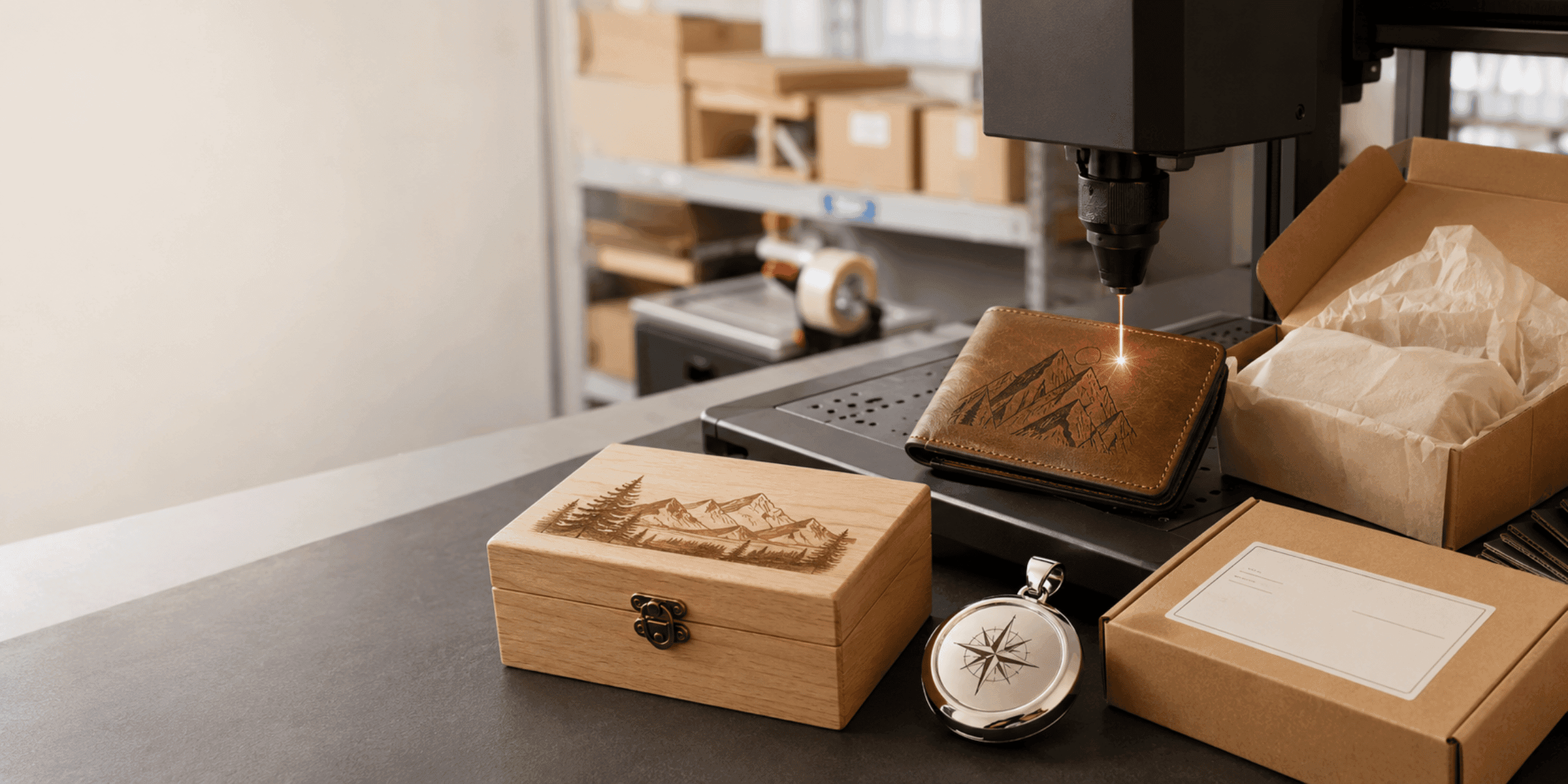
Laser engraving is commonly used for wood, leather, acrylic, coated metals, drinkware, and many promotional products.
Rotary Engraving
Rotary engraving uses a cutting tool to physically remove material from the surface of a product.
It can create a traditional recessed mark and is frequently used for metal, plastic, signage, nameplates, awards, and certain gift products.
Diamond-Drag Engraving
Diamond-drag engraving uses a diamond-tipped tool to scratch fine lines into a metal surface.
It is commonly associated with jewelry, plaques, plated products, awards, and gift items where a precise and elegant line is preferred.
Choosing the Right Engraving Method
Brands should select a process based on more than appearance alone. Important considerations include:
- Material compatibility
- Surface shape
- Product finish
- Available engraving area
- Artwork detail
- Required durability
- Product handling requirements
- Processing time
- Order volume
- Consistency across finished products
Testing determines which process produces the best balance of appearance, accuracy, durability, and production efficiency.
How On-Demand Engraving and Fulfillment Work Together
Engraving is only one part of a successful personalization program. Accurate data handling, inventory control, quality assurance, packing, and shipping are equally important.
1. Product and Material Testing
Before launch, sample products should be tested to determine whether they can be engraved safely, accurately, and consistently.
Testing establishes:
- The preferred engraving method
- Appropriate machine settings
- The allowable engraving area
- Expected color and contrast
- Fixture or jig requirements
- Product handling standards
- Expected production time
- Acceptable variations
This process should be repeated whenever the material, manufacturer, coating, or product design changes.
2. Artwork and Template Setup
Each product should have an approved engraving template.
The template can define:
- Engraving placement
- Maximum engraving dimensions
- Text orientation
- Approved fonts
- Maximum character count
- Maximum number of lines
- Monogram layout
- Logo dimensions
- Safe spacing around seams or hardware
Templates help keep production consistent even when every customer orders different text.
3. Ecommerce Personalization Setup
The product page must collect personalization details clearly and accurately.
Depending on the product, customers may need to provide:
- The exact text to engrave
- A preferred font
- A monogram format
- An engraving location
- An uploaded logo or design
- Capitalization preferences
- A gift message
- Confirmation of the final design
The personalization data should travel with the order in a structured, easy-to-understand format. Clear data reduces manual interpretation and helps prevent production mistakes.
4. Inventory Storage and Order Routing
Blank products are stored until orders are received.
The order management or warehouse management system identifies which orders require engraving and sends them to the appropriate production workflow. This allows standard and personalized orders to follow different processes when necessary.
Accurate inventory management ensures that blank products remain available for both regular and customized orders.
5. Picking and Order Matching
The correct product must be picked and matched with the correct customer instructions.
Barcode scanning, controlled work queues, and clear production documentation are important because an accurate engraving placed on the wrong product is still an incorrect order.
The operator should confirm the:
- Product SKU
- Product color
- Product size
- Engraving design
- Customer text
- Engraving location
- Order number
6. Engraving Production
The operator loads the approved template, verifies the personalization information, positions the product using the appropriate fixture or jig, and completes the engraving.
Standardized production processes help maintain alignment, legibility, contrast, and overall appearance across orders.
7. Quality Control
The finished product should be checked against the original order before it is packed.
Quality control may verify:
- Exact spelling
- Capitalization
- Dates and punctuation
- Correct monogram order
- Correct product SKU
- Correct color and size
- Engraving position
- Engraving orientation
- Legibility and contrast
- Surface condition
- Product cleanliness
- Packaging requirements
- Gift notes and inserts
Because engraved products generally cannot be returned to blank inventory, quality control is one of the most important parts of the process.
8. Packing and Shipping
After the item passes inspection, it is packed to protect both the product and the engraved surface.
Depending on the brand, engraved orders may also include:
- Branded boxes
- Gift notes
- Tissue paper
- Product inserts
- Ribbons
- Promotional materials
- Custom packaging
- Protective sleeves
- Kitted accessories
The completed order is then shipped directly to the customer, and tracking information is returned to the selling channel.
Managing Personalization Data Accurately
In on-demand engraving, customer information becomes production information. A small data error can result in a finished product that cannot be restocked or resold.
Brands can reduce personalization errors by building clear rules into the online ordering experience.
Useful controls include:
- Setting character limits based on the engraving area
- Showing customers examples of the correct monogram order
- Preventing unsupported characters or emojis
- Requiring customers to confirm spelling before checkout
- Using structured fields instead of open-ended order notes
- Defining whether text will be engraved exactly as entered
- Establishing an approval process for uploaded logos
- Keeping personalization details attached to the order
- Providing a digital preview when possible
- Clearly explaining capitalization and punctuation rules
For higher-value products or complicated artwork, a proof approval step may be appropriate. For simple names, dates, and initials, approved templates can create a faster and more automated workflow.
Quality-Control Standards for Engraved Products
Because most personalized products cannot be returned to blank inventory, quality control should be built into every stage of production.
A strong on-demand engraving program typically includes:
Approved Samples
A physical reference sample or approved image establishes the expected appearance for each product.
Controlled Templates
Operators use approved production files instead of rebuilding layouts for every order.
Defined Tolerances
Placement, dimensions, contrast, depth, and natural material variations should have documented acceptable limits.
First-Piece Verification
New products, designs, or production runs should be checked before additional units are processed.
Order-to-Item Verification
The physical product must remain connected to the correct order and personalization details throughout production.
Final Inspection
Spelling, product selection, engraving quality, packaging, and order contents should be reviewed before shipping.
Production Traceability
Production records make it easier to investigate problems, identify patterns, and improve the process.
Brands should also create clear policies for customer-entered errors, production errors, natural material variations, and returns involving personalized products.
What Affects the Cost of On-Demand Engraving?
The cost of an engraving program depends on the labor, equipment, handling, and complexity required for each product.
Common pricing factors include:
- Product material
- Product finish
- Engraving method
- Size of the engraving area
- Number of engraving locations
- Text-only personalization
- Custom logos or artwork
- File preparation requirements
- Product shape
- Fixture or jig requirements
- Per-order production time
- Quality-control requirements
- Packaging and kitting
- Monthly order volume
- Expedited turnaround requirements
Brands should evaluate the complete cost per personalized order, including engraving, fulfillment, packaging, shipping, software, customer service, and potential error allowances.
The engraving fee alone does not represent the total cost of operating a successful personalization program.
Challenges to Consider Before Launching On-Demand Engraving
On-demand engraving can be highly effective, but a successful program requires careful setup.
Variations in Natural Materials
Wood grain and leather texture can cause the same design to look slightly different across multiple units.
Product photography and customer-facing descriptions should set realistic expectations about these natural variations.
Curved or Irregular Products
Bottles, jewelry, tools, and assembled goods may require specialized fixtures, rotary attachments, or carefully defined engraving areas.
Limited Engraving Space
Long messages may not fit attractively on small products.
Character limits, line limits, and online previews can help customers understand what will fit within the available area.
Thin Coatings or Plating
Excessive power or engraving depth can expose unwanted material or damage a plated finish. Testing and controlled settings are essential.
Seasonal Demand
Personalized gifting demand frequently increases around holidays, weddings, graduations, and major events.
Brands and fulfillment partners should establish order cutoffs, daily production capacity, and turnaround expectations before peak periods begin.
Irreversible Errors
Engraving is generally permanent. Accurate order data, barcode verification, approved templates, and final inspections help protect inventory and the customer experience.
How to Choose an On-Demand Engraving Partner
The right provider should be able to manage personalization as part of a repeatable ecommerce fulfillment operation.
Brands should ask potential engraving partners the following questions:
- Which engraving methods do you offer?
- Which materials can you engrave?
- Will you test each product before launch?
- Can you store blank inventory?
- Can you fulfill standard and engraved orders?
- How do you receive personalization details?
- Can you integrate with our ecommerce platform?
- What prevents text from being applied to the wrong product?
- Can you manage multiple fonts and designs?
- Can you engrave multiple product locations?
- What are your standard turnaround times?
- What is your daily production capacity?
- How do you verify spelling and placement?
- What happens when a product fails quality control?
- Can you provide custom packaging and kitting?
- Can you include gift notes and inserts?
- How are inventory and tracking information updated?
- Can the program expand into corporate gifting or wholesale orders?
A provider that can engrave a single sample is not necessarily prepared to manage thousands of unique ecommerce orders. Operational controls, data management, inventory accuracy, and fulfillment experience are just as important as equipment capabilities.
On-Demand Engraving Services from Snapl
Snapl helps ecommerce brands combine product personalization with warehousing, order fulfillment, quality control, and shipping.
Brands can send blank inventory to Snapl, offer engraving through their online stores, and route personalized orders through a controlled pick, customize, pack, and ship workflow.
Snapl can support engraving programs for compatible:
- Leather goods
- Wooden products
- Metal accessories
- Plated inventory
- Drinkware
- Jewelry and pendants
- Corporate gifts
- Promotional merchandise
- Travel accessories
- Personalized keepsakes
Each program begins with product testing and workflow development. This allows Snapl and the brand to define the engraving method, placement, artwork, packaging, production requirements, and quality standards before customer orders begin.
By bringing customization and fulfillment together, Snapl helps brands reduce product transfers between vendors, maintain better inventory control, shorten processing times, and create a smoother path from online order to finished personalized product.
Whether a brand is launching its first engraved product, expanding a corporate gifting program, or adding personalization across a larger catalog, Snapl can develop a workflow around its products, ecommerce channels, order volume, and customer experience.
Frequently Asked Questions About On-Demand Engraving
What Does On-Demand Engraving Mean?
On-demand engraving means a product is customized after a customer places an order. Blank inventory is stored until the requested name, initials, date, message, logo, or design is received.
What Products Can Be Engraved for Ecommerce Orders?
Common products include leather accessories, wooden gifts, tumblers, drinkware, jewelry, plated products, acrylic items, tools, awards, keychains, corporate gifts, and promotional products.
Every product should be tested before it is made available for purchase.
Can Engraved Products Be Fulfilled One Order at a Time?
Yes. A properly designed on-demand engraving workflow can process individual direct-to-consumer orders. Each item is customized, inspected, packed, and shipped to the correct customer.
Can Logos and Custom Artwork Be Engraved?
In many cases, yes. The artwork may need to be converted into a production-ready format and tested for detail, size, contrast, and compatibility with the product.
Brands should also confirm that customers have permission to use submitted artwork.
How Long Does On-Demand Engraving Take?
Turnaround depends on the product, engraving method, order complexity, proofing requirements, and daily volume.
Simple personalization using an approved template is generally faster than processing new custom artwork or engraving multiple locations.
Is There a Minimum Order Quantity?
On-demand engraving programs are designed to support individual customer orders. However, setup, testing, pricing, and inventory requirements vary by provider and project.
Can On-Demand Engraving Integrate With Shopify?
Yes. Personalization information can be collected using Shopify product fields or a product customization application and passed with the order.
The exact integration depends on the Shopify store, customization application, order management system, and fulfillment workflow.
How Can Ecommerce Brands Reduce Engraving Errors?
Clear customer input fields, character limits, approved templates, barcode verification, controlled production queues, first-piece checks, and final quality inspections all help reduce errors.
Can Engraved Orders Include Gift Notes or Custom Packaging?
Yes. Engraving can be combined with gift notes, branded packaging, product inserts, kitting, tissue paper, ribbons, and other value-added fulfillment services.
Is Engraving Permanent?
Engraving is generally intended to be permanent. However, its durability and appearance depend on the material, coating, engraving method, product use, and care.
Build a Scalable Product-Personalization Program
On-demand engraving gives ecommerce brands a practical way to offer meaningful personalization without stocking pre-customized merchandise.
The strongest programs connect accurate customer data, proven engraving methods, inventory control, quality assurance, packaging, and direct-to-customer fulfillment within one coordinated workflow.
If your brand wants to offer engraved leather goods, wooden products, metal accessories, plated inventory, drinkware, corporate gifts, or other personalized merchandise, Snapl can help manage the process from product testing through final delivery.

Get Started with On-Demand Engraving Today!
Contact Us